Gaya Ji Darshan
Main Temples
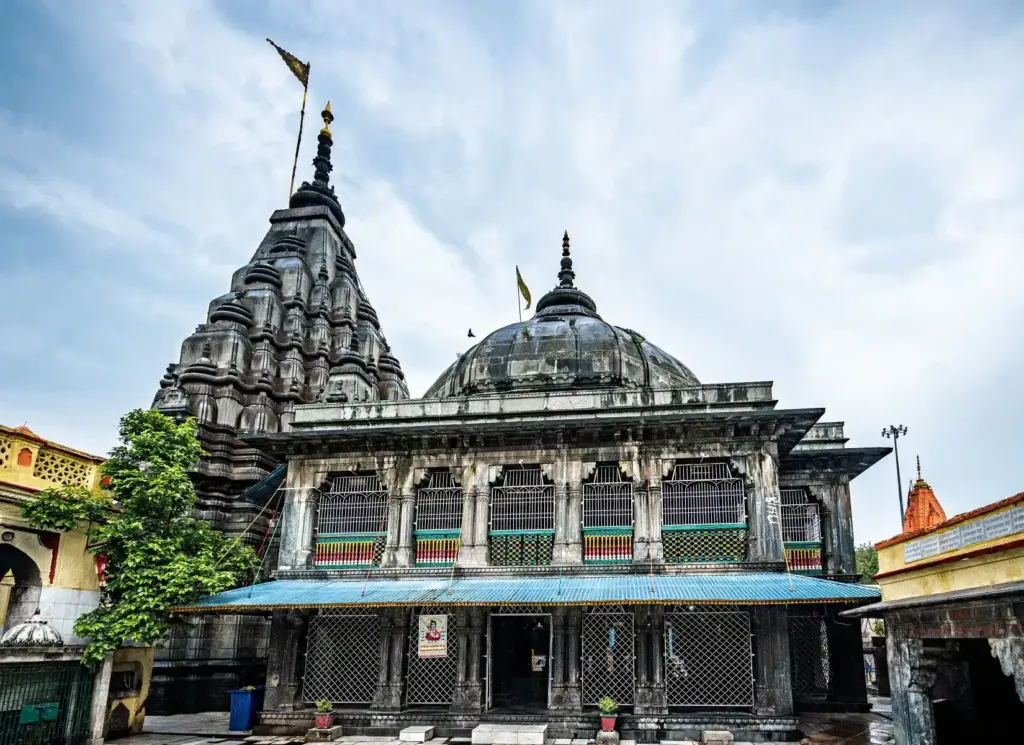
Vishnupad:
Located on the banks of the Falgu River in Gaya, Bihar, Vishnupad Temple is a famous Hindu pilgrimage site dedicated to Lord Vishnu. Constructed by Rani Ahilyabai Holkar in 1787, this temple features a solid rock carving of Vishnu’s foot (Dharmashila) measuring 40 centimeters. It is a major site for Pind Daan (rituals performed for ancestors).
Significance: It is one of the holiest pilgrimage sites for Hindus, where Pind Daan (final rites) are performed to liberate ancestors from the cycle of rebirth.
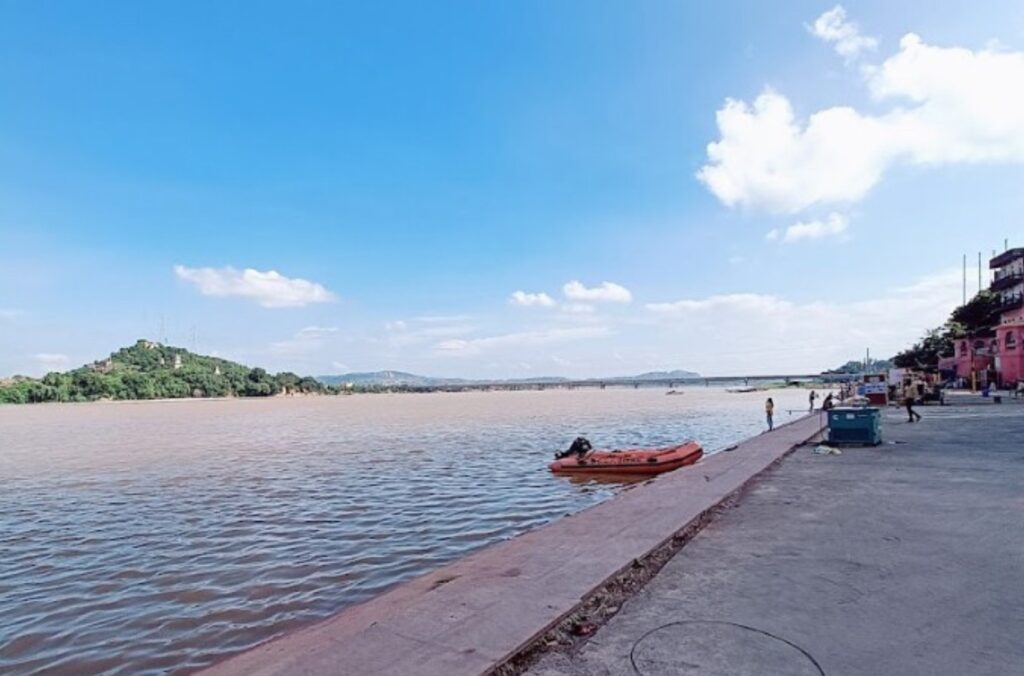
Falgu River (Niranjana):
The Falgu River located in Gaya, Bihar is considered holy as it originates from the confluence of the Lilajan and Mohana rivers. The river mostly flows beneath a wide sandy bed throughout most of the year and holds significant importance for Hindu, Buddhist, and Jain pilgrims who come here for Pind Daan near Vishnupad Temple.
Rituals: The area along the riverbank, especially near Vishnupad Temple, serves as a prominent spot for praying for ancestral liberation.
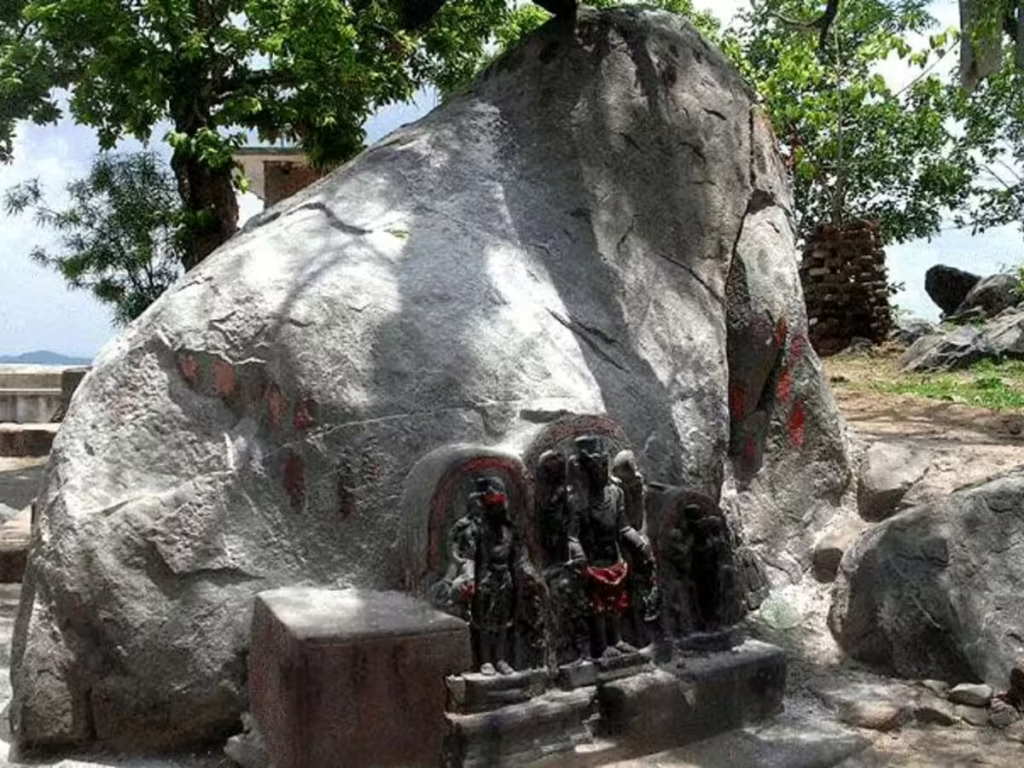
Pretshila
Significance: It is believed that offerings made here help souls attain liberation from the cycle of rebirth, especially those who died prematurely or accidentally. A temple dedicated to Yama Raj (the god of death) stands on this hill. Pilgrims first bathe in the sacred Brahma Kund located at its base.
Structure: Visitors must climb 676 steps to reach the temple situated at the top of this hill.
Akshay vat
Akshaya Vat (also known as Gayavat) is a very ancient and venerated banyan tree located near the Mangla Gauri temple in Gaya city of Bihar. According to mythology, Sita Mata had blessed it to be immortal, due to which its leaves never fall.
Significance: Located near the Vishnupad temple, this tree is considered very sacred in Hinduism for Pindadaan and Shradh Karma during Pitru Paksha.
Mythological belief: According to folklore, it has existed here since the time of Rama-Sita’s exile. It is said that Mother Sita had given this banyan tree the boon of eternal life.
Recognition: Devotees pray here for the peace of the souls of their ancestors and consider it a symbol of eternal blessings.
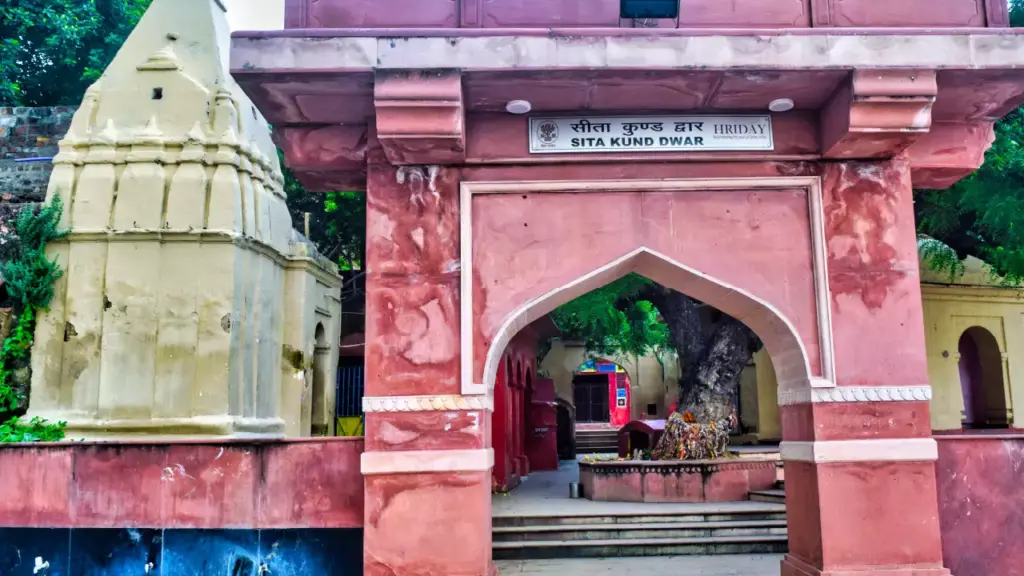
Sita Kund
Sita Kund, located in Gaya, is a holy pilgrimage site on the eastern bank of the Falgu river, opposite the Vishnupad temple, where Sita Mata offered pind to King Dashrath. This is a small ancient temple, which is a witness to the tales of the Ramayana period and is specially visited by devotees during Pitru Paksha.
The historical significance: It is believed that Sita had bathed here and donated the pind of her father-in-law King Dashrath in the sand here, which later became famous as’ Gupta Ganga ‘.
Location: It is located on the other side of the Phalgu river, just opposite the Vishnupad temple.
Place of worship: Inside the temple there is a statue of Mother Sita and a hand holding the pind of King Dasharatha.
Worship: On the occasion of Pitru Paksha and other religious occasions, people bathe here with holy water and offer prayers.
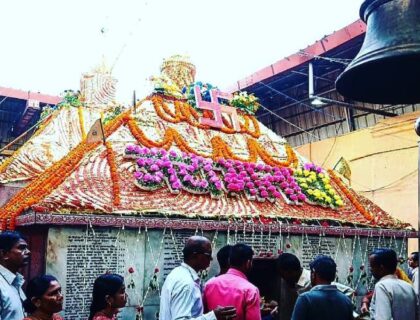
Mangla Gauri Mandir
Mangala Gauri Temple, located in Gaya, Bihar, is an extremely ancient and famous Hindu temple, which is considered to be one of the eighteen Mahashakti Peethas. It is located on the Mangalagauri hill (Bhasmakut mountain). According to the belief, the chest of Mata Sati had fallen here, so this place is the center of power, nutrition and well-being.
Location: Gaya, Bihar (at a distance of about 1 km from Vishnupad Temple).
Significance: It is one of the 18 Mahashakti Peethas. Goddess Sati is worshipped here in the form of Mangala Gauri (Parvati).
The time of the visit: From 6:00 am to 8:00 pm (approx.).
Features: Maa Mangala Gauri is considered to be the Goddess of happiness and prosperity.
History: The present temple structure is believed to be of the 15th century.
Other facts about the temple:
Mentioned in the Puranas: The sacred place finds mention in the Padma Purana, Vayu Purana, Agni Purana and Devi Bhagavata Purana.
Worship: Maa Durga is worshipped thrice a day, morning and night.
Access: One has to climb stairs to reach the temple.
The other temples: Temples of Kali, Ganesha, Hanuman and Shiva are also present in the temple complex.
This place is mainly famous for the resolution of marital disputes, prayers for a happy life and procreation.
Brahmjoni
Brahmayoni Hill (or Brahmajuni) is a prominent and historically significant hill in Gaya district, Bihar, India, close to the Phalgu River and the Vishnupad Temple. It is sacred to both Hindus and Buddhists, with a temple to Brahma, a Shiva temple, and the site where the Buddha gave the Agni Upadesha (Adittapariya Sutra), as mentioned in the List of State Protected Monuments of Bihar (Wikipedia).
The main facts about the Brahmayoni hill:
Significance: Known as Gayasisa in Buddhist texts, this place is where the Buddha preached to a thousand fire-worshipping ascetics, leading them to enlightenment.
Access: To reach the summit, visitors will have to climb about 1,000 stone steps (or 440 depending on the route), from where a panoramic view of Gaya is seen.
The Importance of Hinduism: It is a part of the Pitru Paksha Mela pilgrimage, where devotees offer pind (funeral offerings).
Geography: It is listed as one of the major hills of Gaya district, often mentioned along with the Phetshila and Ramshila hills.
Protection: According to the List of State Protected Monuments in Bihar (Wikipedia), this hill is classified as a State Protected Monument in Bihar.
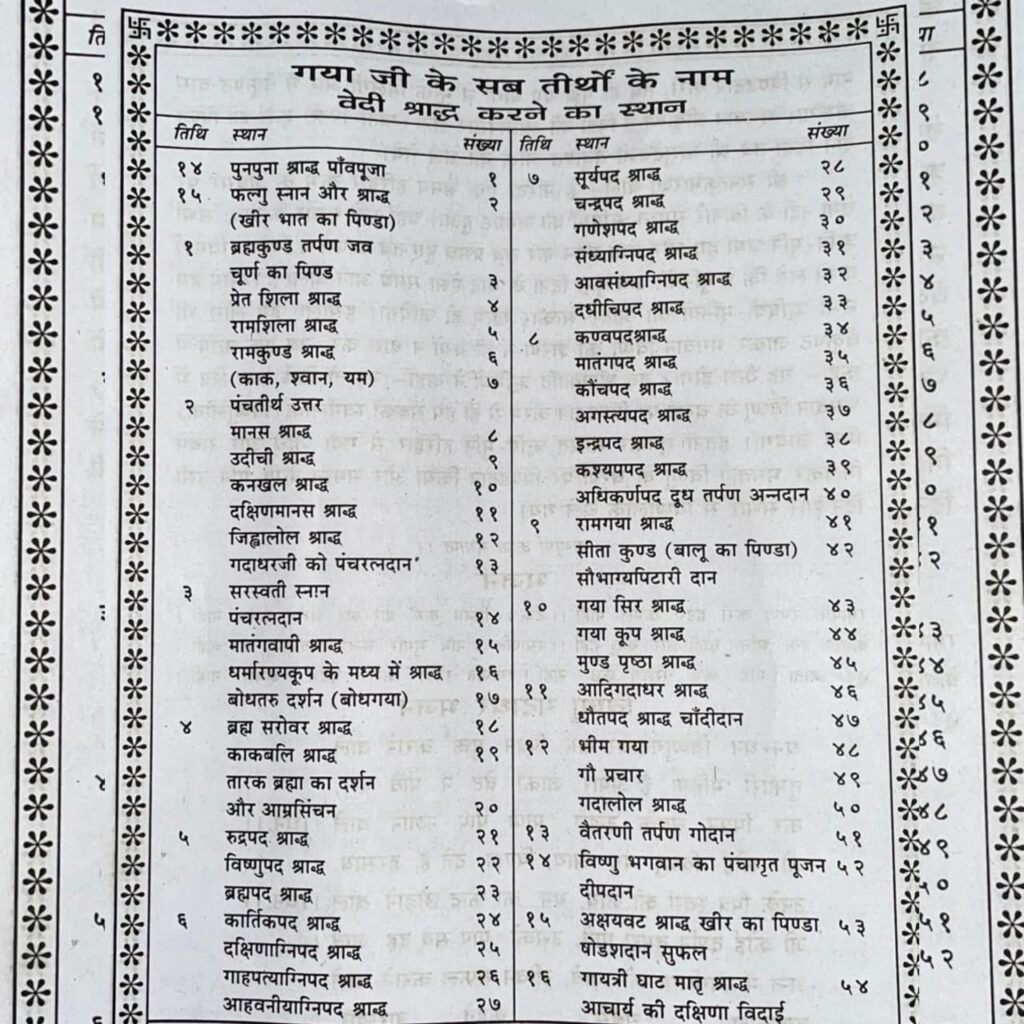
Place of worship
This is a list of Pindadan and religious sites in Gaya. It can be written in sentences as follows:
Punpun Ghat station is located on the Gaya-Patna railway route. Godavari falls on the way to Mangalagauri. Falgu river flows from Devghat to Pitamaheshwar. Below the Prettasila hill are located the Prettasila and Brahmakundas. Ramshila is near the Panchayati Akhara, while Kakwali is located near the Ramshila hill. Uttarmanas Pitamaheshwar Mohalla is in the Vishnupad region and is known as Dakshinmanas Surya Kund. Udichi Surya Kund and Kankhal Surya Kund are also located in the Vishnupad region.
Jihwal is on the bank of Falgu river near Vishnupad temple. Gadadhar Vedi is located in Vishnupad Temple Mandal. The Sharaswati Vedi is located on the east side of Amba village on the Gaya-Bodh Gaya road. Matangwapi, Dharmarnaya and Bodhidharma are located in Bodh Gaya. Brahma Sarovar and Kakabali are located in Maranpur. Amarshechan and Tarakabrahma are near Mangalagauri temple.
In the Vishnupad Temple Mandala, Rudra Pada, Brahma Pada, Dakshinagni Pada, Garhyapatyagni Pada, Ahavaniyagni Pada, Avasthyagni Pada, Surya Pada, Kartikeya Pada, Indra Pada, Agastya Pada, Kanvan Pada, Chandra Pada, Ganesh Pada, Kachchhap Pada, Matang Pada, Kashyap Pada and Gajakarna Pada are located.
Sitakund and Ramgaya are located on the eastern bank of Falgu river opposite Devghat. Gaya Drishta is in Vishnupad crematorium and Gaya Koop is located in Vishnupad temple mandal. Mund Page and Adi Gaya are located on the Karsili hill. Dhaut Pada and Vaitarani are at the southern gate. Bheem Gaya and Goprastha are located in Mangalagauri. Akshayvat and Kadalol are located in the Maranpur area. Gayatri Ghat is located near Brahmani Ghat.
The list of Sarovars / ponds includes Brahma Sarovar, Vaitarani Sarovar, Rukmini Talab, Suryakund, Pitamaheshwar, Godavari, Ramshila and Pretshila.